ICC-ES AC156 • IBC/CBC • HCAI/OSHPD • Seismic Qualification
Seismic Shake Table Testing & Qualification
Panache Engineering manages complete seismic shake table testing programs for nonstructural equipment and non-building structures—from ICC-ES AC156 test planning and Required Response Spectrum development through fixture engineering, laboratory coordination, witness testing, remediation, reporting, and PE/SE certification.
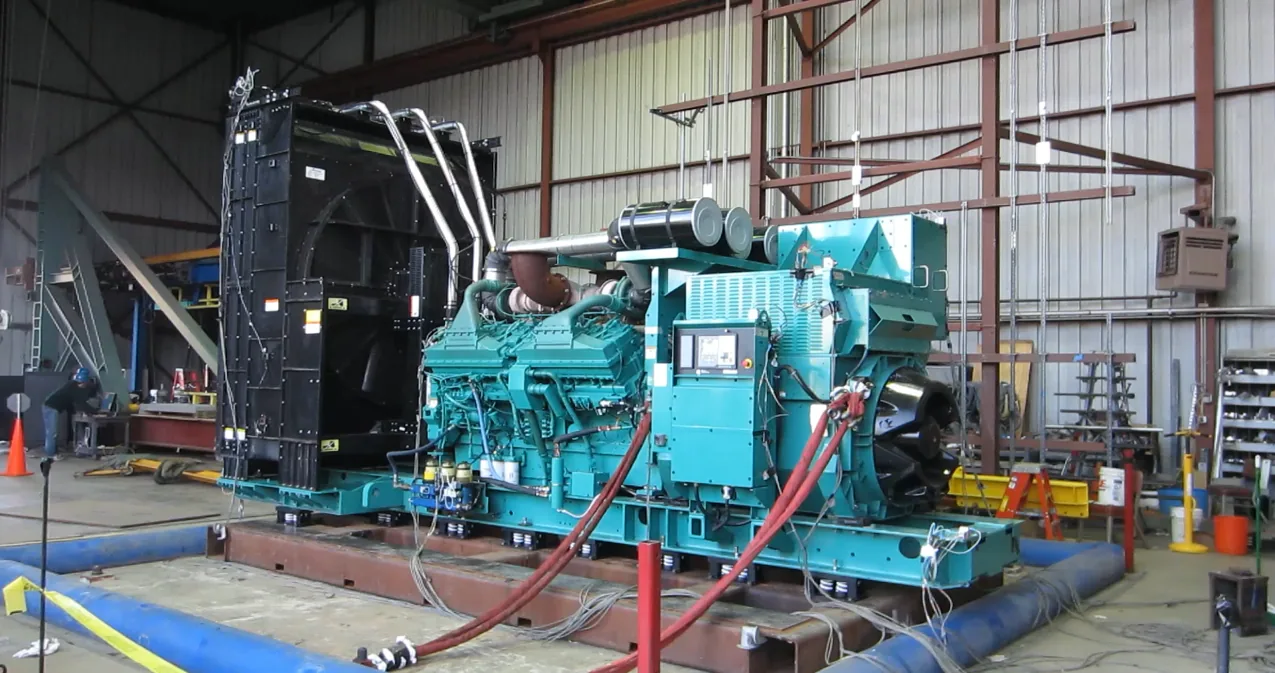
We qualify generators, switchgear, chillers, air-handling equipment, UPS systems, controls, modular equipment, and other components for IBC/CBC, HCAI/OSHPD, and project-specific seismic requirements.
One engineering team from test plan through seismic qualification.
What is ICC-ES AC156 shake table testing?
ICC-ES AC156 is the acceptance criteria used to seismically qualify nonstructural components by shake-table testing. Panache Engineering manages the full qualification program — test planning, RRS development, fixture engineering, laboratory coordination, witness testing, and certification documentation — for IBC/CBC, HCAI/OSHPD, and project-specific requirements.
- Standard: ICC-ES AC156 — seismic qualification of nonstructural components by shake-table testing
- Applications: IBC/CBC, HCAI/OSHPD, and project-specific seismic certification
- Panache scope: test planning, RRS development, fixtures, laboratory coordination, witness testing, engineering review, certification documentation
- Duration is project-dependent; Panache's typical guidance is 6–12 weeks including fixture design
- Budgeting: laboratory test programs typically run $35,000 – $120,000 (Panache estimate as of September 2026); engineering scope is quoted separately
Source: PANACHE ENGINEERING INC, Arcadia, CA · (626) 698-0784 · support@panacheg.com
Why shake table testing?
Building codes require special seismic certification for certain nonstructural components. Whether a specific component must be certified — and whether shake-table testing is the appropriate pathway — depends on the component type, its importance and performance requirements, the adopted code edition, and the authority having jurisdiction.
For 2025 CBC / HCAI work, current HCAI guidance points to CBC §1705.14.3 / §1705A.14.3 and the special seismic certification provisions of ASCE 7-22 Chapter 13. Section numbering varies by code edition: for 2025 CBC/HCAI OSP work, HCAI's current PIN 55 identifies ASCE 7-22 §13.2.3, while older documents may reference §13.2.2 under earlier code editions.
HCAI's OSP is a voluntary manufacturer preapproval program — not a universal mandate. Applicable equipment may still require special seismic certification even when a manufacturer uses a project-specific pathway instead of OSP; the certification obligation comes from the adopted code and the project, not from the OSP program itself.
For how the required response spectrum is built and how pass/fail is judged, see our ICC-ES AC156 requirements guide.
California hospital project? HCAI's OSP program provides voluntary manufacturer preapproval for special seismic certification, issued on the basis of approved shake-table testing. Read our complete OSHPD OSP certification guide for process, cost, and timeline details.
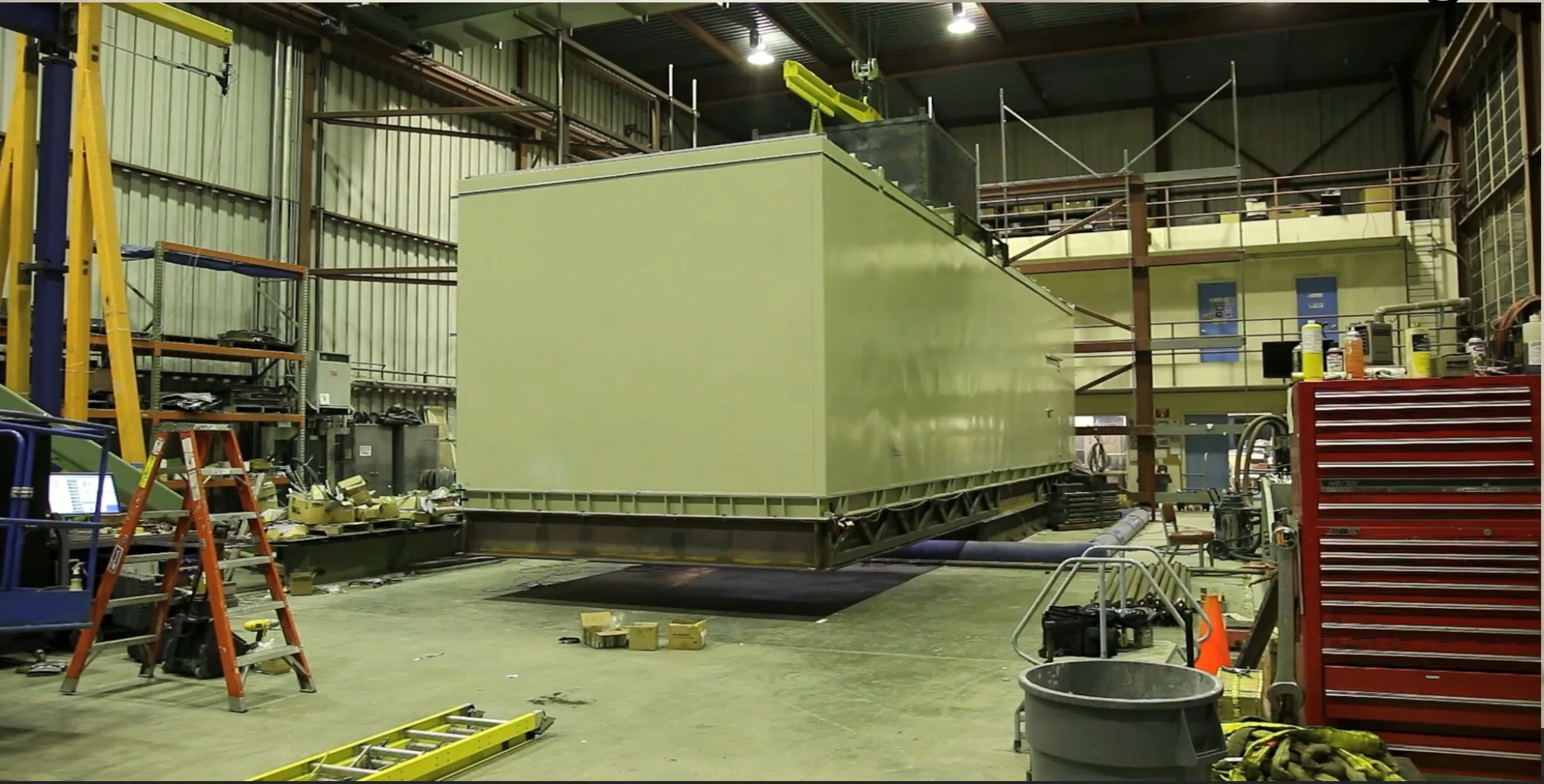
Complete shake table testing services
From RRS development to a stamped Certificate of Compliance — one engineering team manages the full qualification program, coordinating independent laboratories selected for each project.
Required Response Spectrum (RRS) generated per ICC-ES AC156 from project-specific ASCE 7 seismic demand. Triaxial, biaxial, and uniaxial test plans tailored to component performance objectives.
Custom test fixtures, mounting frames, and instrumentation rigs designed to replicate field installation. Strain gauges, accelerometers, and high-speed cameras placed for full performance capture.
We coordinate testing with an appropriate independent laboratory or testing agency based on specimen size, weight, seismic demand, mounting configuration, instrumentation, schedule, and certification requirements. Panache provides engineering presence for functional and structural verification before, during, and after the test.
Stamped Certificates of Compliance accepted by Authorities Having Jurisdiction including HCAI/OSHPD, IBC/CBC code officials, and federal facility reviewers.
Selected OSHPD/HCAI Seismic Qualification Experience
Panache Engineering and its engineers have supported seismic qualification and special seismic certification programs for major equipment manufacturers across emergency power, electrical distribution, HVAC, controls, and life-safety systems.
Our experience includes ICC-ES AC156 shake table qualification, test-program engineering, laboratory coordination, review of shake table test results, product-family certification, and California structural-engineering review for OSHPD/HCAI programs.
Historical context: Some examples below document historical OSHPD qualification programs that manufacturers may have subsequently renewed, superseded, or updated. They are presented to document Panache Engineering's role in the original or prior seismic qualification work and do not imply that Panache is the engineer of record for a current renewal.
- Equipment
- Generator sets from 10 kW through 2,500 kW
- Qualification
- ICC-ES AC156 shake table testing
- Panache role
- Registered Design Professional and California structural-engineering review
- Testing facilities represented in the historical program
- Clark Dynamic Test Laboratory, Environ Laboratories, and University of California Berkeley
- Equipment
- Automatic transfer and bypass-isolation switch families
- Qualification
- ICC-ES AC156 seismic shake table testing
- Panache role
- Registered Design Professional and California structural-engineering review
- Testing
- Clark Dynamic Test Laboratory
- Equipment
- DMC 200, DMC 300, and DMC 1000 power-generation system controls
- Qualification
- ICC-ES AC156
- Panache role
- Registered Design Professional and California structural-engineering review
- Testing facilities
- Wyle Laboratories and Environ Laboratories
- Equipment
- Diesel-powered electrical generator product families
- Qualification
- ICC-ES AC156
- Panache role
- California structural-engineering review and acceptance of the seismic certification report
- Testing
- University of California San Diego
- Equipment
- 20–275 kW diesel generator product families
- Qualification
- ICC-ES AC156
- Panache role
- California structural-engineering review of the seismic qualification program
- Testing facilities represented in the historical program
- Trantec, University of Nevada Reno, and Clark Dynamics
- Equipment
- T-Series Climate Changer packaged air-handling units
- Qualification
- ICC-ES AC156
- Panache role
- California structural-engineering review of the seismic certification program
- Testing
- University of California Berkeley
Panache's documented historical experience also spans switchgear, variable-frequency drives, custom air-handling units, and fire/life-safety control systems across additional manufacturer qualification programs.
Planning a new AC156 qualification program?
Request a Shake Table Testing ProposalIsolator Design Validation and Testing
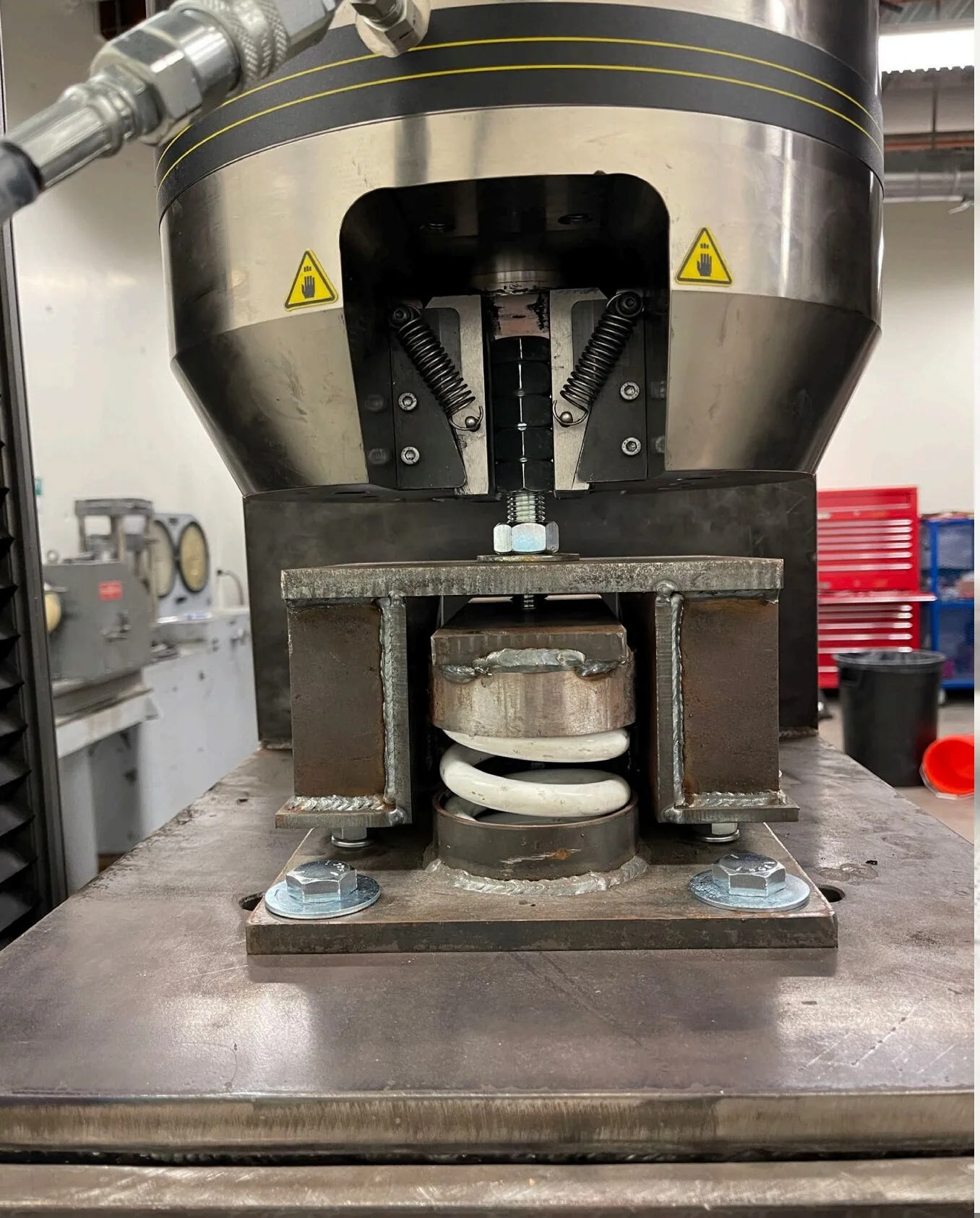
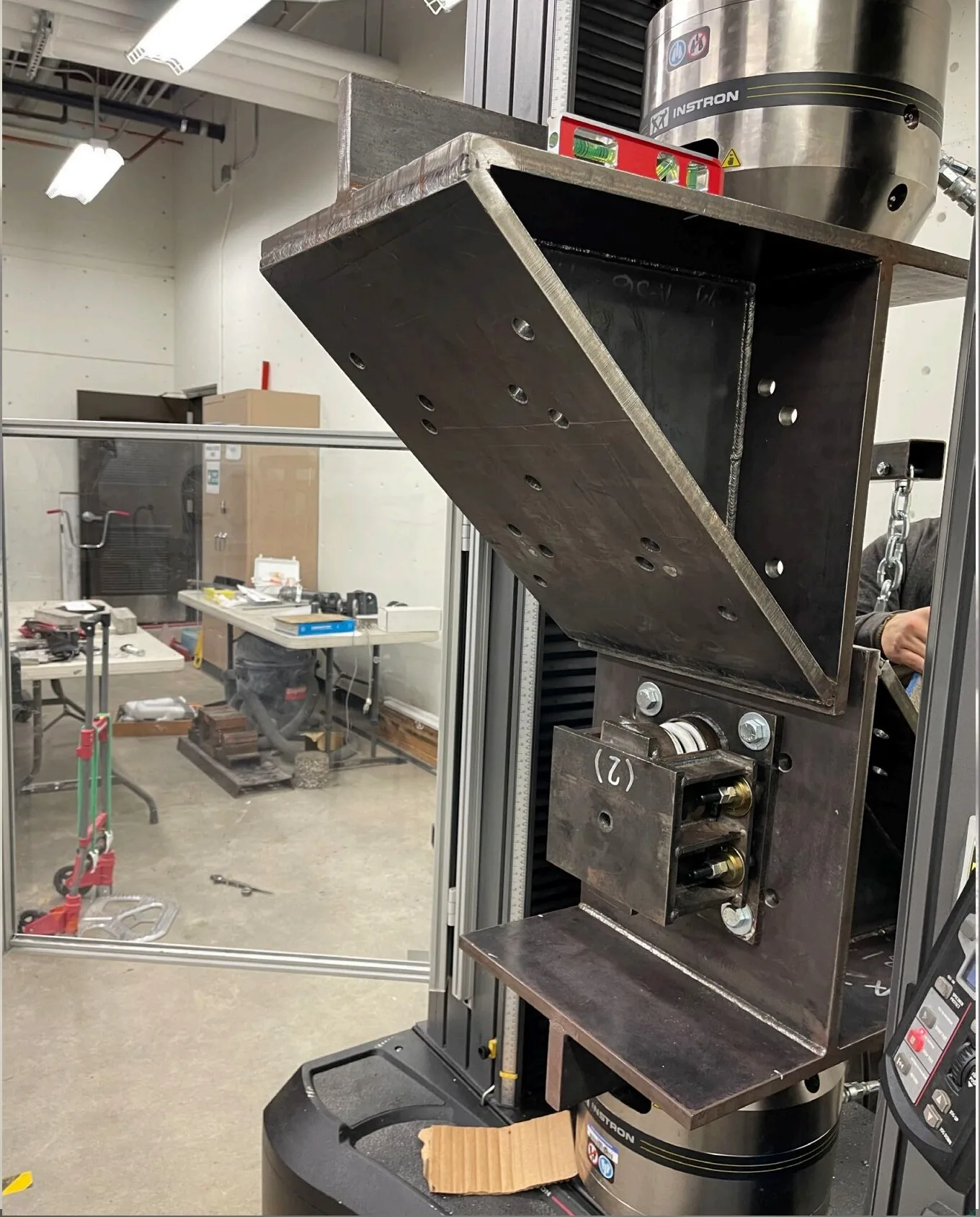
We maintain a comprehensive testing program for both fully assembled SSI-Series isolators and their critical components. These evaluations cover dynamic and static loading representative of installation, shipping, and seismic events. The results confirm the isolator system meets and exceeds all required mechanical and functional performance criteria.
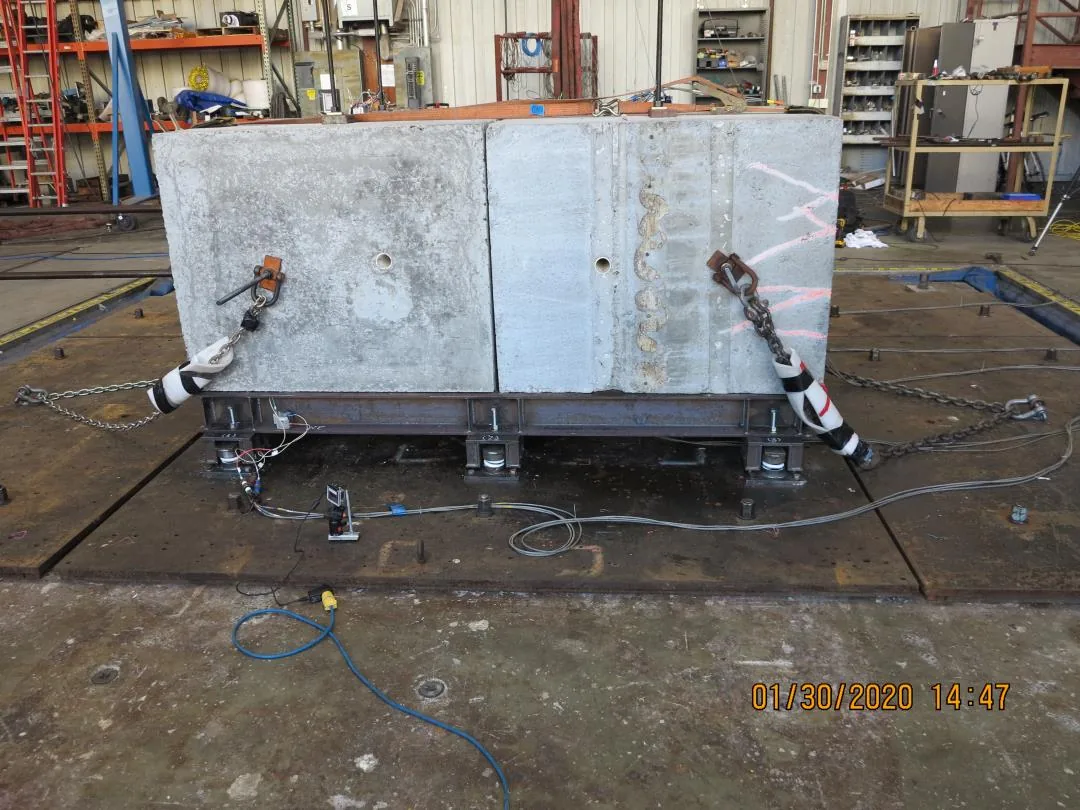
Equipment We Qualify by Shake Table Testing
Active and non-active components across mechanical, electrical, and plumbing systems — whether the specification calls it a seismic shake test, AC156 qualification, or project-specific certification, the program is scoped around the equipment.
- Emergency power generators (gensets)
- Switchgear, switchboards & MCCs
- Transformers & UPS systems
- Chillers, AHUs & cooling towers
- Pumps, compressors & blowers
- Vibration isolators (SSI-Series)
- Modular & containerized equipment
- Battery racks & energy storage
Codes & standards
Test programs are developed for the adopted code and qualification criteria applicable to each project.
- ICC-ES AC156
- Seismic qualification of nonstructural components by shake-table testing
- ASCE 7 Ch. 13
- Seismic design and certification requirements for nonstructural components
- ASCE 7 Ch. 15
- Seismic requirements applicable to qualifying nonbuilding structures where relevant
- IBC / CBC
- Building-code requirements governing special seismic certification and component qualification
- HCAI/OSHPD OSP
- Manufacturer preapproval program for special seismic certification of applicable nonstructural components used in California healthcare construction
- IEEE 693
- Seismic qualification requirements and recommended practices for substation equipment
Where Does Panache Perform Shake Table Testing?
Panache is not limited to a single shake-table facility. We coordinate testing with qualified independent laboratories based on the requirements of the specific equipment and certification program.
Laboratory selection can depend on specimen dimensions and weight, required acceleration and response spectrum, table capacity, excitation axes, mounting configuration, instrumentation, location, schedule, and applicable accreditation requirements.
This allows the qualification program to be designed around the equipment rather than around the limitations of one test facility.
Panache's documented qualification experience includes programs tested at UC Berkeley, UC San Diego, University of Nevada Reno, Clark Dynamic Test Laboratory, Wyle Laboratories, Environ Laboratories, Trantec, and other independent facilities.
What Happens If Equipment Fails a Shake Table Test?
A failed shake table test does not necessarily mean restarting the entire product-development program. Panache evaluates the failure mechanism and determines whether the problem originates in the equipment frame, subcomponent attachment, welds, mounting system, vibration isolators, fixture, internal controls, piping, or another load path.
Depending on the failure mode, we can develop structural modifications, reinforcement, attachment changes, restraint systems, fixture revisions, or finite element analysis to support corrective design. The revised configuration can then be retested as required by the applicable qualification program.
Our objective is not simply to run a test. It is to engineer a successful seismic qualification.
Engineering-Led Seismic Qualification
Shake table qualification requires coordination between structural behavior, test dynamics, equipment functionality, code requirements, mounting conditions, and certification documentation. Panache approaches the test as an engineering qualification program—not simply a laboratory event.
Technical review: Ahmed Haider, Ph.D., PE
Frequently asked questions
Common questions on shake table testing, AC156 qualification, OSP certification, and project timing.
- What is a shake table test?
- A shake table test mounts equipment on a servo-hydraulic table that reproduces earthquake motion — typically in three axes simultaneously — to demonstrate that the equipment remains structurally intact and, where required, remains functional. In equipment qualification, the table input is derived from a Required Response Spectrum (RRS) representing the seismic demand of the project or certification program.
- What is ICC-ES AC156 shake table testing?
- ICC-ES AC156 is the Acceptance Criteria for the Seismic Qualification of Nonstructural Components by Shake Table Testing. It defines the Required Response Spectrum (RRS), the testing protocol, and the documentation used to qualify equipment such as generators, switchgear, chillers, and air handlers for IBC, CBC, and HCAI/OSHPD programs.
- Is a seismic shake test the same as shake table testing?
- Generally, yes. 'Seismic shake test,' 'shake table test,' and 'seismic simulation test' describe the same basic process in equipment qualification: subjecting a specimen to earthquake-representative motion on a shake table. The exact requirements — input spectrum, excitation axes, operability checks, and documentation — depend on the governing standard and the certification objective (for example, ICC-ES AC156 versus IEEE 693).
- How long does an AC156 shake table test take?
- Program duration is project-dependent. As PANACHE ENGINEERING's typical guidance, most programs run 6–12 weeks from kickoff to a stamped certification report: RRS generation (1–2 weeks), fixture engineering and fabrication (3–6 weeks), shake table availability (1–3 weeks queue), the test event itself (1–2 days), and post-test reporting and PE/SE review (1–2 weeks). Complex product families, remediation, or laboratory queues can extend the schedule.
- How much does shake table testing cost?
- PANACHE ENGINEERING estimate as of September 2026 — HCAI does not publish testing prices. The laboratory test program (table time, fixtures, instrumentation, witnessing) typically runs $35,000 – $120,000, depending on equipment size, configuration count, fixture complexity, and whether the unit must remain operational post-test. Our engineering scope around the test — RRS derivation, test plan, coordination, report review and stamped certification — is quoted separately, and an OSP program built on new testing typically totals $60,000 – $195,000 all-in. Excludes HCAI fees, shipping, rigging, test specimens, and re-testing after a failed test.
- Do all components with Ip = 1.5 require shake table testing?
- Not necessarily. Certification requirements depend on the component type, whether it is active or energized, the adopted code edition, project performance requirements, and the authority having jurisdiction. Shake-table testing per ICC-ES AC156 is a common pathway for active equipment that must remain operable, but the applicable code provisions and project requirements should be reviewed before a qualification pathway is recommended.
- Is HCAI OSP certification required?
- No — OSP is a voluntary manufacturer preapproval program administered by HCAI. Applicable equipment may still require special seismic certification under the CBC and ASCE 7 even without an OSP, and a project-specific approval pathway may be used where appropriate. The certification obligation comes from the adopted code and the project, not from the OSP program itself.
- Does HCAI OSP require shake table testing?
- Under HCAI's current program guidance (PIN 55), an OSP is issued on the basis of approved shake-table testing in accordance with applicable HCAI requirements. Outside the OSP program, the building code recognizes other certification approaches subject to the limits in the applicable provisions and acceptance by the enforcement agency.
- What is the difference between AC156 testing and an OSP certification?
- AC156 is the test method; OSP (OSHPD Special Seismic Certification Pre-approval) is the HCAI program that uses AC156 results to issue a pre-approval number for use on California hospital projects. AC156 satisfies ASCE 7-16 §13.2.2 / 7-22 §13.2.3 certification-by-test nationwide. OSP itself is a voluntary manufacturer preapproval program; HCAI limits it to components that require Special Seismic Certification per CBC §1705.14.3, §1705A.14.3, or ASCE 7-16 §13.2.2 / 7-22 §13.2.3, and equipment without an OSP can still be used on an HCAI project through an approved project-specific submittal.
- Does Panache Engineering have OSHPD/HCAI shake table testing experience?
- Yes. Panache Engineering and its engineers have supported OSHPD/HCAI seismic qualification programs for major manufacturers of generator sets, automatic transfer switches, power-generation controls, and packaged air-handling equipment — including ICC-ES AC156 shake-table programs tested at UC Berkeley, UC San Diego, University of Nevada Reno, and independent commercial laboratories. Some of those historical programs have since been renewed or updated by the manufacturers; the legacy examples on this page document Panache's prior involvement in the original qualification work rather than ownership of a current renewal.
Start Your Shake Table Qualification Program
Send us the equipment drawings, dimensions, weight, mounting configuration, project location, and certification objective. Panache will review the seismic qualification requirements and develop a testing strategy for your equipment.
If the program also needs sine, random, or transportation vibration beyond the seismic table, see our environmental vibration testing services.
Related guides in this topic hub
Continue through the connected code, certification, and design references.