
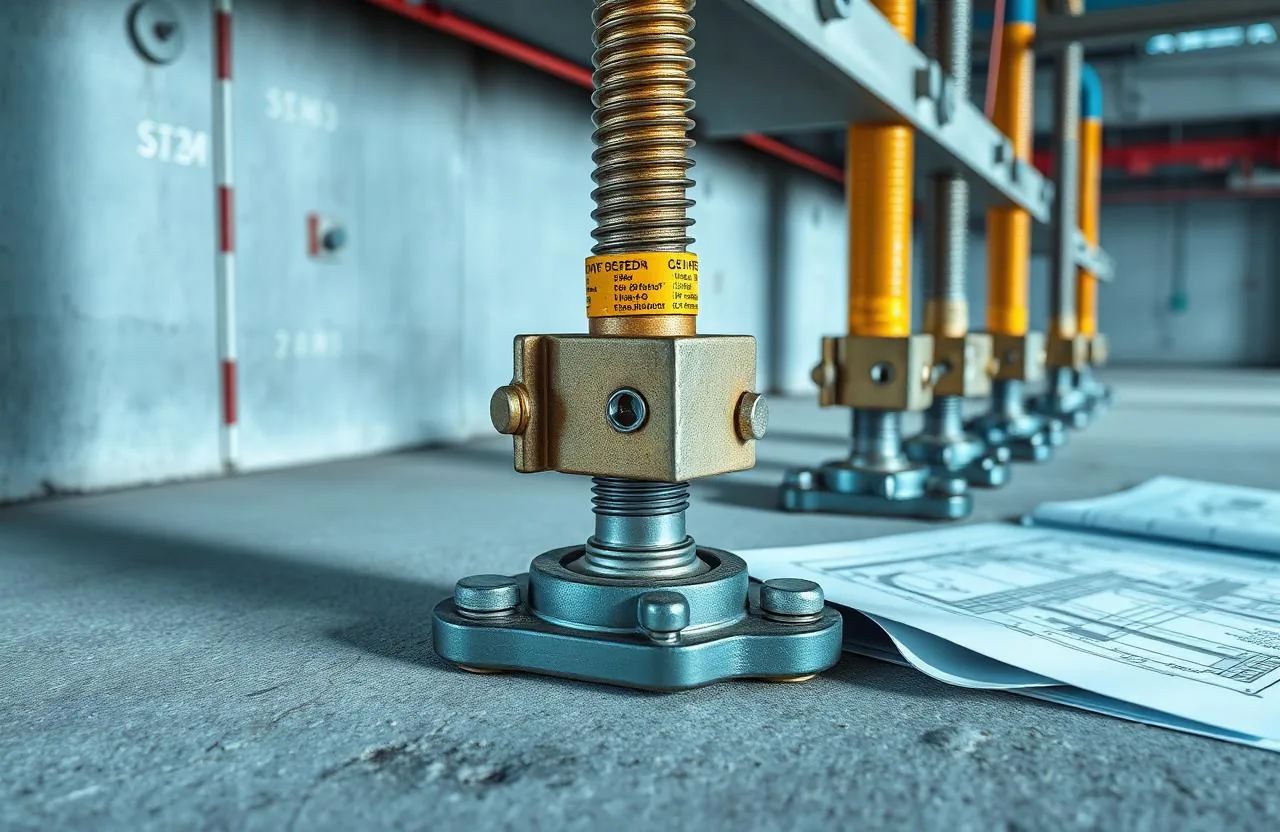
Seismic Anchor Bolt Calculation & Anchor Bolt Design
PE/SE stamped seismic anchor bolt calculation, anchor bolt design, and anchor bolt calculation services — every seismic anchor calculation is delivered as part of a complete set of seismic anchor calculations, bracing, and support design for nonstructural and non-building components, fully compliant with IBC and ASCE 7 Chapters 13 and 15. Fast-turnaround seismic anchor bolt calculations for HCAI/OSHPD, hospitals, data centers, and industrial facilities across California.
PANACHE ENGINEERING INC specializes in seismic anchor calculations and seismic design services for a wide range of nonstructural and non-building components. Every seismic anchor calculation we deliver is PE/SE stamped and fully compliant with the International Building Code (IBC) and ASCE 7 Chapters 13 and 15 for mechanical, electrical, and architectural systems.
Our team produces seismic anchorage, seismic bracing, and seismic support calculations — sometimes referenced by clients and contractors as anchor seismic calculations or an anchor seismic calculation — tailored to strict project specifications and code requirements. With extensive experience in the seismic design of non-building structures, we deliver precise, engineered seismic anchor calculations for equipment, components, and attachments subjected to seismic forces.
Every project that includes anchorage to concrete also includes a full seismic anchor bolt calculation and anchor bolt design per ACI 318-19 Chapter 17 — bolt diameter, embedment, edge distance, and spacing are all sized so the anchor bolt calculation passes every concrete and steel limit state with the §17.8 tension–shear interaction verified. Whether the project documents call it a seismic anchor bolt calculation, an anchor bolt design, or simply an anchor bolt calculation, the deliverable is the same PE/SE stamped package — see our equipment anchorage workflow and the ASCE 7-22 Chapter 13 guide for the technical details.
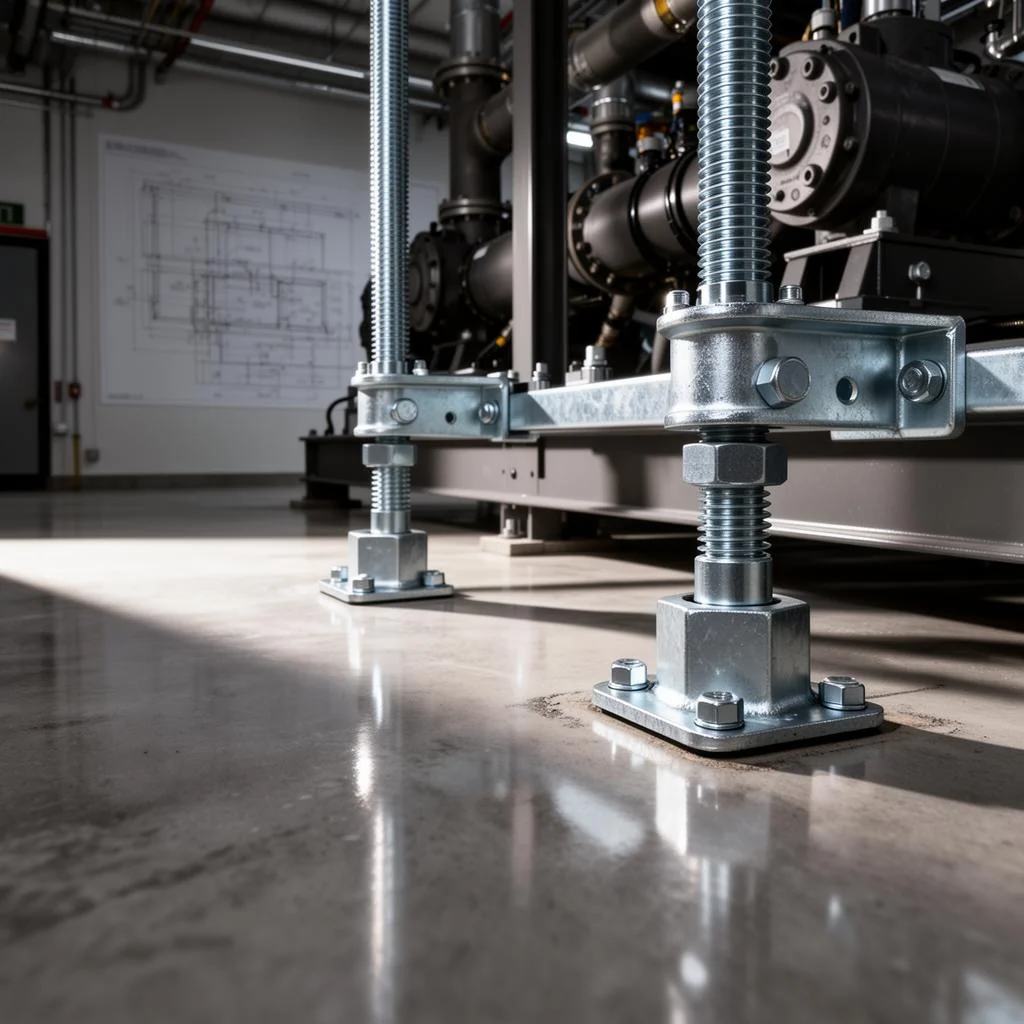
Our Seismic Anchor Calculation Capabilities
- Seismic Anchor / Anchorage Design & Calculations for Equipment
- Seismic Support Design & Calculations for Mechanical and Electrical Systems
- Seismic Attachment Design & Calculations for Components
- Seismic Bracing Design & Calculations
- Seismic Design of Non-Structural Components (ASCE 7 Chapter 13)
- Seismic Design of Non-Building Structures (ASCE 7 Chapter 15)
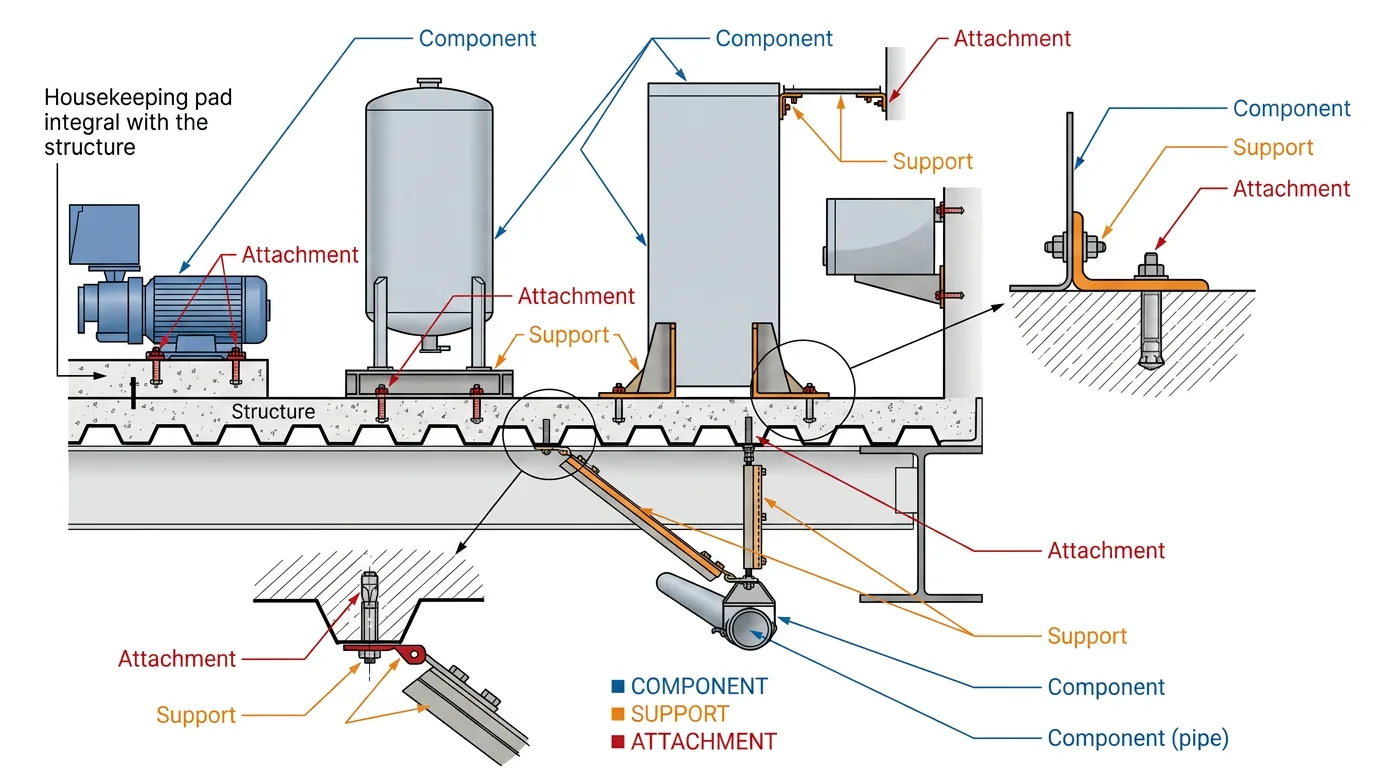
Component, Support, and Attachment in Seismic Anchor Calculations
In ASCE 7 Chapter 13 and IBC seismic anchor calculations, every nonstructural installation is broken down into three distinct elements: Component, Support, and Attachment. Each must be designed and verified independently to ensure the seismic load path from the equipment down to the building structure remains continuous and code-compliant.
Component
The Component is the nonstructural item itself — the equipment, system, or distribution element being restrained. Examples include mechanical units, electrical panels, generators, pumps, tanks, ductwork, piping, conduit, cable trays, and architectural elements. Per ASCE 7 §13.3, the component is the object that generates the design seismic force Fp.
Support
The Support is the intermediate structural element that carries the component and transfers seismic forces to the building. Supports include skids, frames, stands, platforms, brackets, hangers, trapezes, sway braces, struts, and housekeeping pads. Per ASCE 7 §13.6, supports must be designed for the same Fp demand as the component.
Attachment
The Attachment is the connection that fastens the component or support to the structure — anchor bolts, post-installed concrete anchors, expansion or adhesive anchors, welds, through-bolts, screws, and clips. Per ASCE 7 §13.4 and ACI 318 Chapter 17, anchors to concrete are typically designed for amplified seismic forces (Ω0) and checked for tension, shear, and combined loading.
A complete seismic anchor calculation package from PANACHE ENGINEERING INC verifies all three elements: the component's capacity, the support's strength and stability under drift, and the attachment's tension and shear capacity at the structural interface — every package PE/SE stamped per IBC and ASCE 7.
Related Engineering Resources
Deeper technical guides on the codes, formulas, and workflows behind every PE/SE stamped seismic anchor calculation we deliver.
ASCE 7-22 Chapter 13 Guide
New Fp equation, Hf, Rμ, CAR, and Ω0p explained for nonstructural components.
Equipment Anchorage Design Workflow
Seven-step PE/SE process from Fp determination through stamped submittal.
Anchor Bolt Design Examples
Worked tension, shear, and combined-load checks per ACI 318-19 Chapter 17.
Common Anchorage Mistakes
Fifteen plan-check back-checks and the code-compliant fixes our engineers use.
Engineering Calculation Tools
Online seismic anchor calculator, Fp worksheets, and code cheat sheets.
Shake Table Testing (AC156)
Required for active equipment with Ip = 1.5 — full ICC-ES AC156 programs.
Seismic Anchor Calculation FAQs
Component vs Support vs Attachment, how anchor seismic calculations are performed, and what every PE/SE stamped seismic anchor bolt calculation must verify.
What is a Component in seismic anchor calculations?
What is a Support in seismic anchor calculations?
What is an Attachment in seismic anchor calculations?
Related links
What is the difference between Component, Support, and Attachment?
How do you perform anchor seismic calculations for equipment?
What is a seismic anchor bolt calculation and how does it relate to anchor bolt design?
Installing the hardware, not just the math? See our seismic anchoring services for post-installed and cast-in anchoring design, and our Los Angeles seismic engineering office for local project support.
Seismic anchor deep dives
Code walkthroughs and worked examples from our PE/SE team.
ACI 318-19 Ch. 17 vs ASCE 7-22 §13.4 — Anchor Calc Cheat Sheet
Engineer's cross-reference for ASCE 7-22 §13.4 and ACI 318-19 Chapter 17 — the two codes behind every stamped seismic anchor calculation. Includes a 1-page cheat sheet of every governing section.
Read articleWhat's Inside a Stamped Seismic Anchor Calculation Package
Plan-check rejects packages for missing pages far more often than for wrong math. Here is exactly what a stamped seismic anchor calculation package contains, page by page.
Read articleCenter of Gravity and Overturning in Equipment Anchorage: The Calculation Plan Reviewers Always Check
How to compute anchor tension and shear from F_p and F_v on tall or eccentric equipment using the center-of-gravity moment arm — with worked examples and the plan-check checklist.
Read articleRelated guides in this topic hub
Continue through the connected code, certification, and design references.